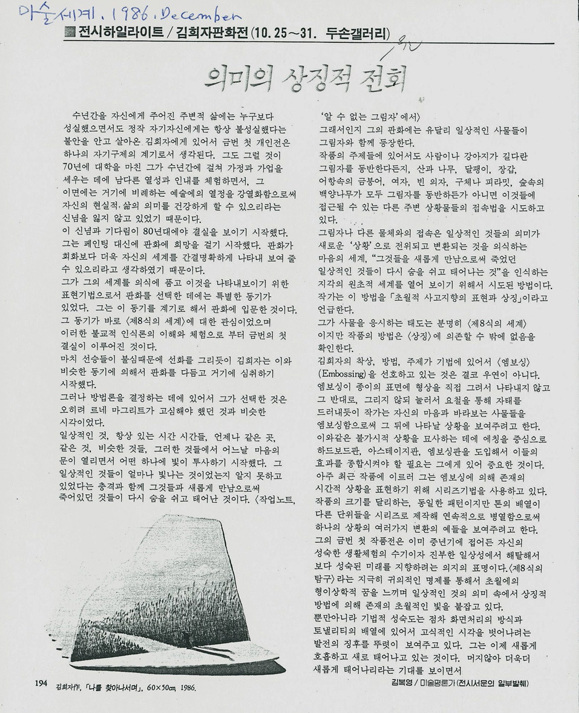
Press
October, 1986
Kim, Bok Young | Art Critic, Ph.D
For several years, Wheiza Kim has lived with the anxiety that, although she has been more conscientious than anyone else in fulfilling the responsibilities of the life assigned to her, she has always been neglectful of herself. In this respect, her first solo exhibition may be regarded as an occasion for personal redemption. Having graduated from university in 1970, she devoted exceptional enthusiasm and perseverance over many years to establishing her family and family business. Yet throughout this period, she never lost the conviction that by intensifying her artistic passion in proportion to these responsibilities, she could give greater meaning and vitality to her actual life.
This conviction and patient anticipation began to bear fruit only in the 1980s. She began to place her hopes in printmaking rather than painting, believing that printmaking would enable her to express her own world more concisely and clearly than painting.
There was a particular motivation behind her decision to choose printmaking as the means of expressing the world she held within her consciousness. It was this motivation that led her to take up printmaking. Specifically, it was her interest in 〈The World of the Eighth Consciousness〉, and her understanding and experience of Buddhist epistemology that ultimately brought about the first fruits of her artistic endeavor in this exhibition.
Just as Zen monks create Zen paintings out of their devotion to the Buddha, Kim began to develop and immerse herself in printmaking out of a similar motivation.
In determining her artistic methodology, however, she adopted a perspective resembling the one with which René Magritte had grappled.
"Ordinary things, the ever-present passage of time, familiar places, the same things, and things that resemble one another—one day, the door of my mind opened, and a certain light began to shine upon them. I was struck by the realization that I had never known how radiant these everyday things were. Through encountering them anew, things that had seemed lifeless began to breathe and come alive again." (From the artist's notes, ‘Unknown Shadow’)
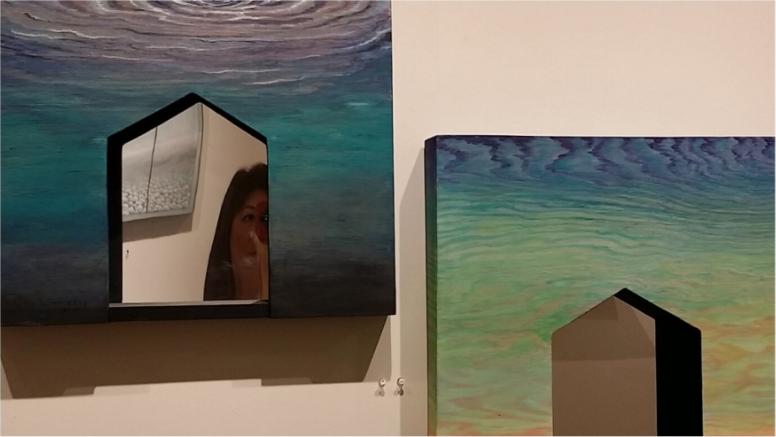
Perhaps for this reason, distinctly ordinary objects appear alongside shadows in her prints.
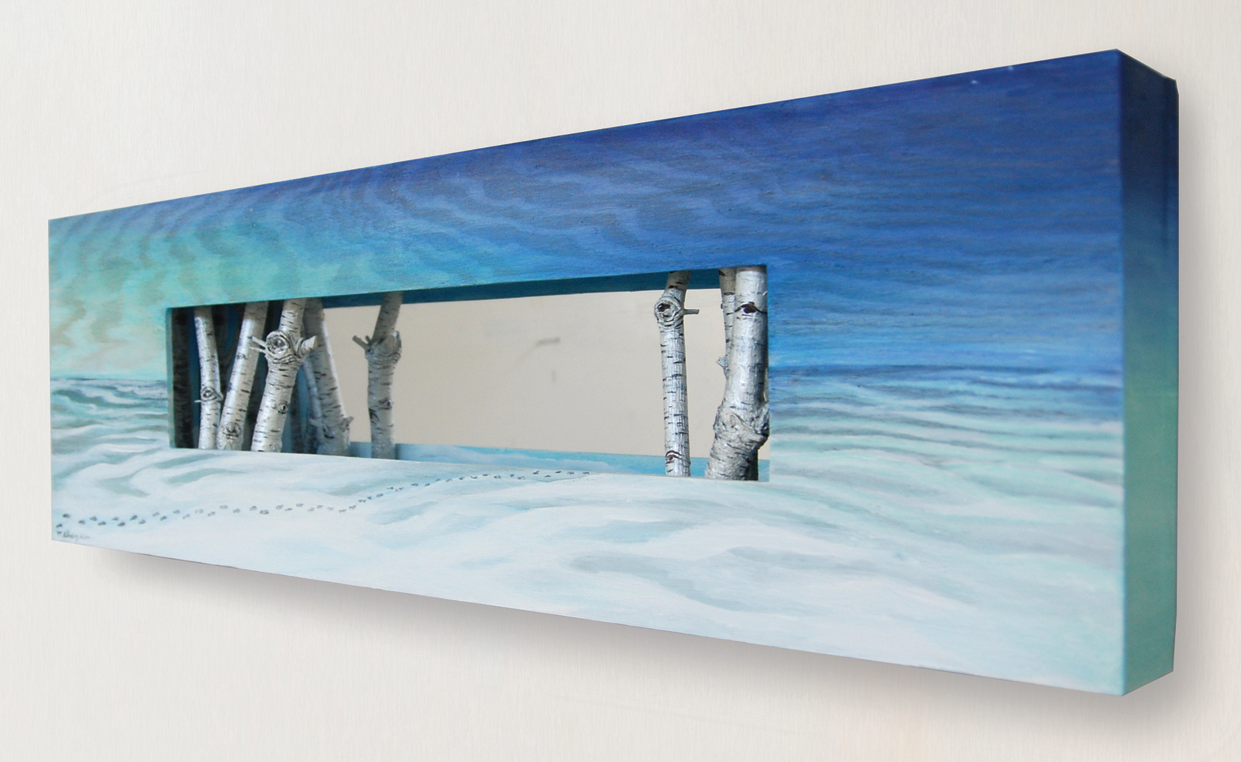
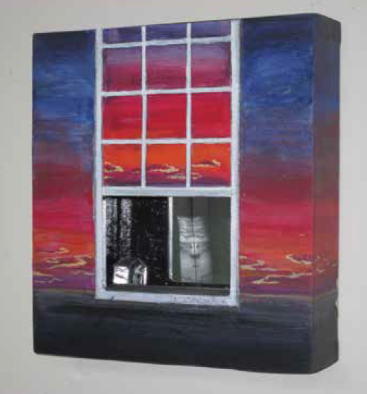
Among the subjects of her works, people and dogs are accompanied by elongated shadows, while mountains, trees, snails, gloves, goldfish in a fishbowl, women, empty chairs, spheres, pyramids, and poplar trees in a forest either cast shadows of their own or are presented through arrangements that establish connections with other surrounding elements.
The interaction of shadows with other objects is a method intended to reveal a primordial world of perception: a world of consciousness in which the meanings of ordinary things are displaced and transformed into new 'situations,' and in which one recognizes that, "through encountering them anew, everyday things that had been lifeless begin to breathe and come alive again." The artist refers to this method as "the expression and symbolism of an orientation toward transcendental thought."
Although her attitude toward the objects she contemplates is clearly grounded in 〈The World of the Eighth Consciousness〉, her artistic method necessarily relies upon symbolism.
It is by no means coincidental that Kim favors embossing in the conception, methodology, subject matter, and technique of her work. Rather than depicting forms directly on the surface of paper, embossing reveals their appearance through raised and recessed impressions created by pressure. In a similar manner, Kim seeks to emboss her own mind and the objects she observes, thereby revealing the situations that lie beyond their visible appearances.
To depict such invisible situations, it is important for her to combine the effects of etching with those of hardboard plates, acetate sheets, and embossing plates.
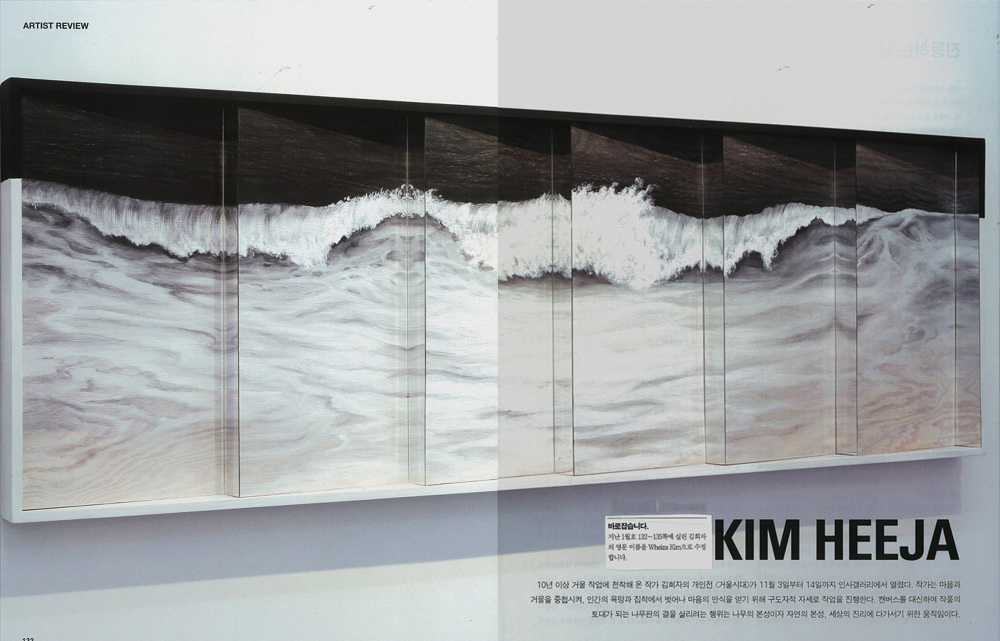
In her most recent works, she has begun employing serial techniques to express the temporal conditions of existence through embossing. She produces units of varying sizes that share the same pattern but differ in their tonal arrangements, placing them consecutively in a series to demonstrate the multiple transformations of a single situation.
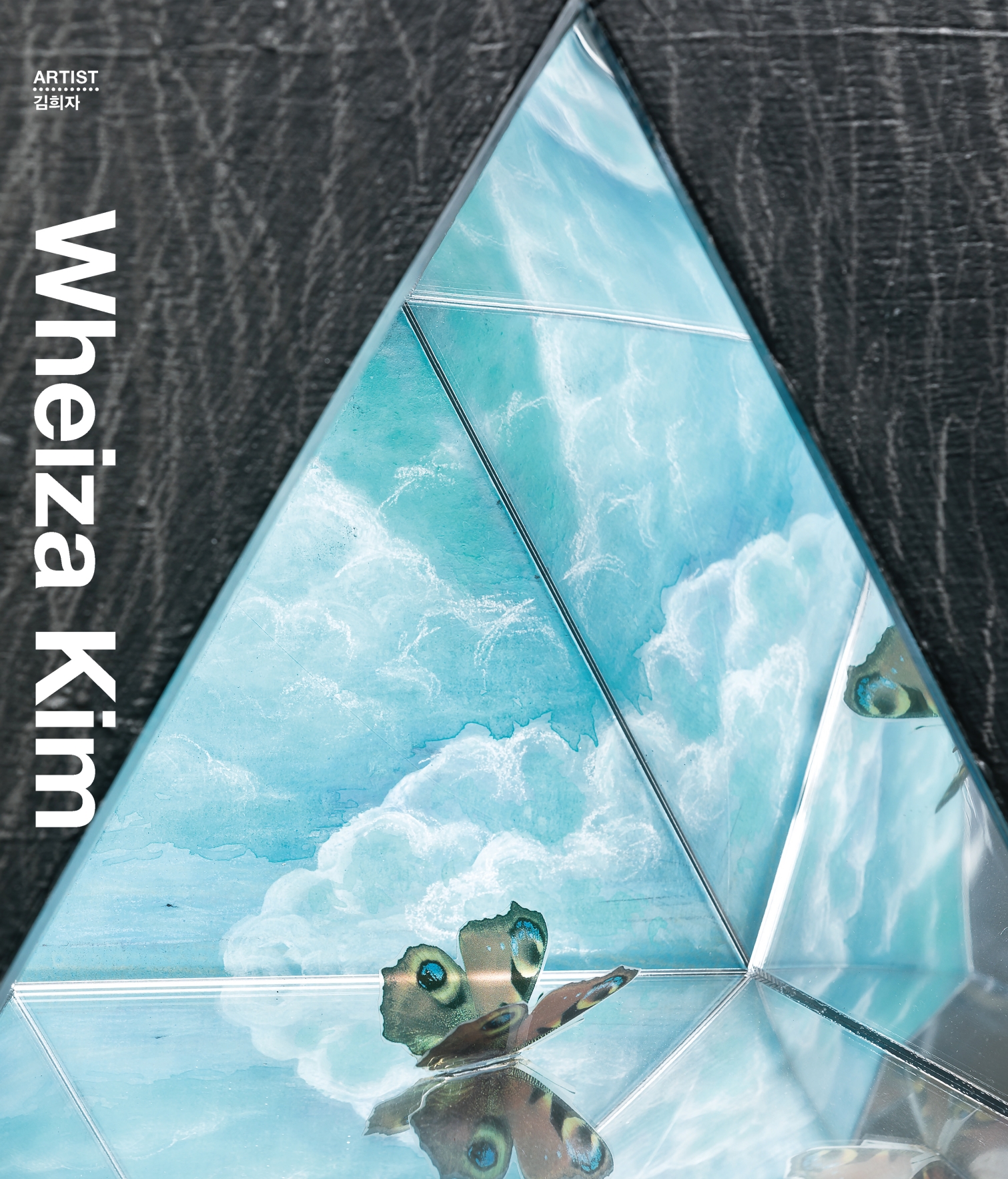
Kim's first solo exhibition is both a personal account of her mature life experiences, now that she has entered middle age, and an expression of her determination to liberate herself from the banality of everyday existence and move toward a more mature future. Through the profoundly devotional proposition of 〈An Exploration of the Eighth Consciousness〉, she envisions a metaphysical aspiration toward transcendence and seeks to capture the transcendent light of existence through symbolic methods embedded in the meanings of everyday things.
Furthermore, her growing technical maturity reveals clear signs of development in her efforts to move beyond conventional visual approaches, particularly in her treatment of the pictorial surface and arrangement of tonalities. She is now breathing anew and undergoing a process of rebirth. One looks forward to seeing her emerge, before long, in an even more fully renewed form.