Artist
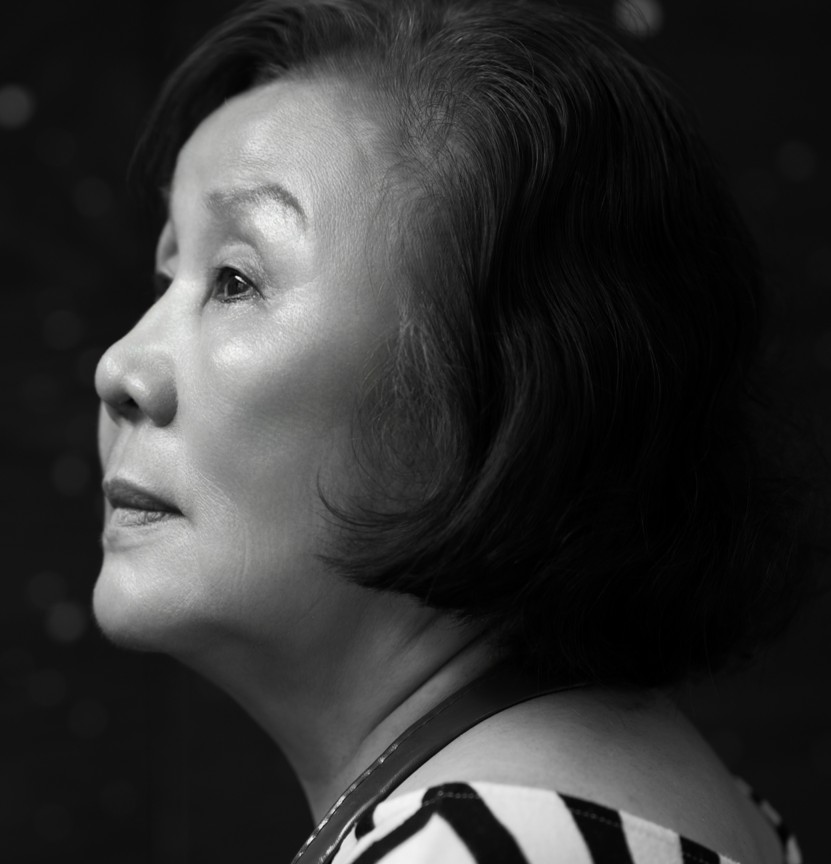
Wheiza Kim (b.1948)
Wheiza Kim received her BFA from the College of Fine Arts at Seoul National University and later earned her MFA in Printmaking from Sungshin Women’s University. She continues to explore psychological landscapes where nature and the human mind intersect, using trees, wood grain, and mirrors as key elements in her practice.
kimwheiza@gmail.com

Wheiza Kim’s practice begins with an exploration of the human mind through the landscape of nature. Trees and wood grain, wind and waves serve as ways in which nature records traces of time and life, while mirrors symbolize the human mind through which the world is perceived and interpreted. By incorporating mirrors into the surfaces of her works and connecting their fronts and backs, interiors and exteriors, Kim creates spaces in which reality and image, the visible and the invisible, and consciousness and the unconscious overlap.
Wood grain is a particularly important formal and conceptual point of departure in Kim’s practice. She regards the grain of each tree as a record of the time and environment through which it has lived, approaching it as a kind of “secret code” or narrative left behind by nature. Rather than imposing images upon the wood, Kim follows its existing patterns to discover forms resembling wind, waves, sky, and forest. In doing so, she brings the traces created by nature and the artist’s own intervention together on a single surface.
Kim also employs triangles and structures composed of three mirrors to create spaces in which a single image is multiplied and transformed through repeated reflection. The appearance of the work changes according to the viewer’s position, light, and surrounding environment, and at times the viewer’s own reflection becomes part of the work. Her works therefore operate not as fixed images but as continuously changing relationships:
→ Nature → Image → Mirror → Viewer → Mind
Buddhist Yogācāra thought and meditation, along with Carl Jung’s theories of the unconscious, form an important intellectual background to this practice. Having spent many years near the forests and sea of Long Island in the United States, Kim came to regard nature not as an external object but as a living presence that breathes alongside human beings and records the passage of time. After returning to Korea, she began reconnecting these experiences with her own cultural and spiritual roots. In Wheiza Kim’s work, landscape ultimately becomes not a representation of the external world, but a “Psychological Scenery” in which the world and the human mind continually reflect and reshape one another.