Critiques
2023
Donald Kuspit | Art Critic
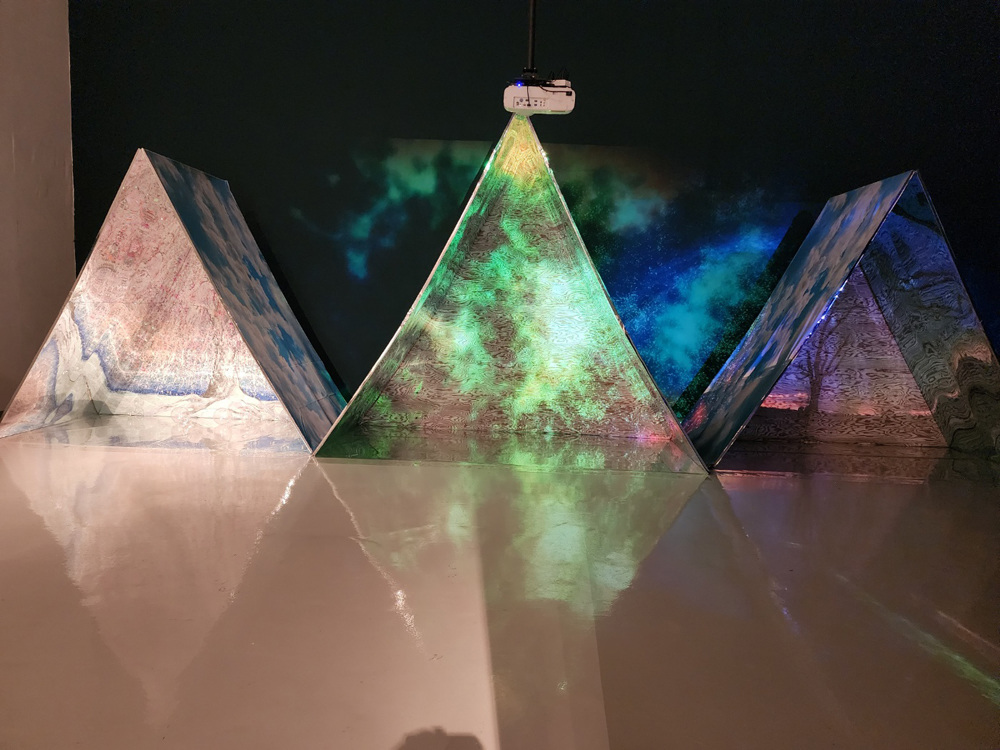
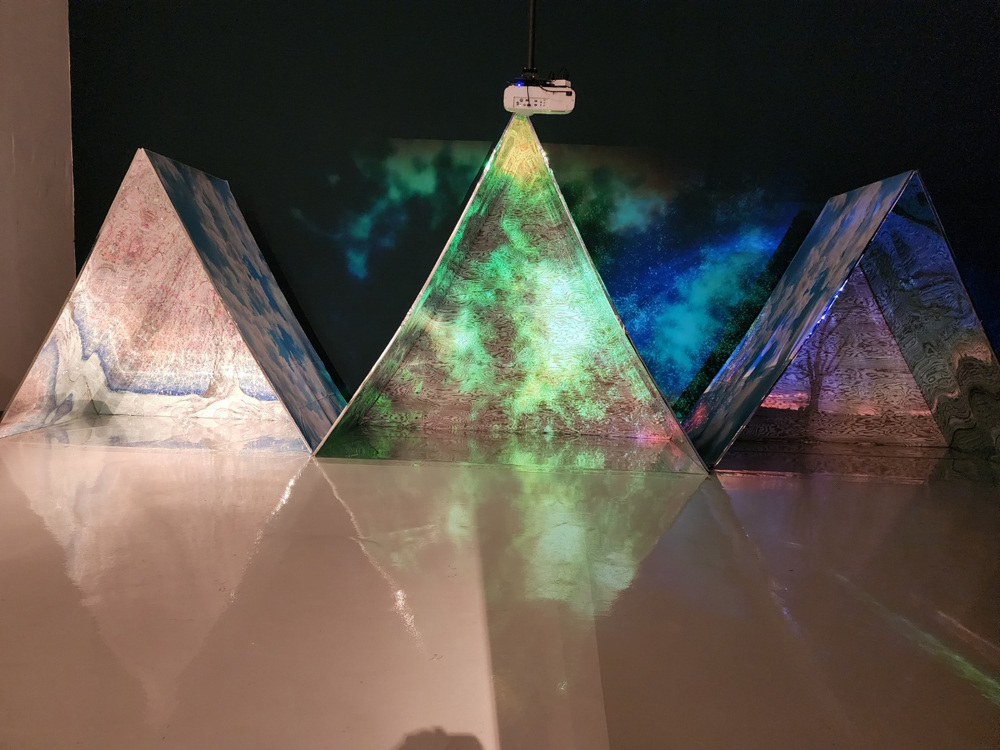
I like Wheiza Kim’s work, particularly her “tent” structures, not just for their symbolic power—their Zen Buddhist implications—but for their sensuous beauty and structural intricacy. In the tent structures, outside and inside are at odds, forming one kind of contrast—one system of opposites—and the expansive, brooding surfaces of cool, oceanic color, within which sudden, impulsive bursts of luminous, often fiery colors occur, form another.
As in so many of Kim’s works, there is a sense of cosmic space, within which earthly elements occur, both natural and human. The inner eyes that, together with the clouds, form a kind of aura around the dome represent the introspective search for salvation, while the dark falling figures, in their insular globes, seem to represent souls who are damned. Like all of Kim’s works, the tent works are emotionally resonant and spiritually meaningful.
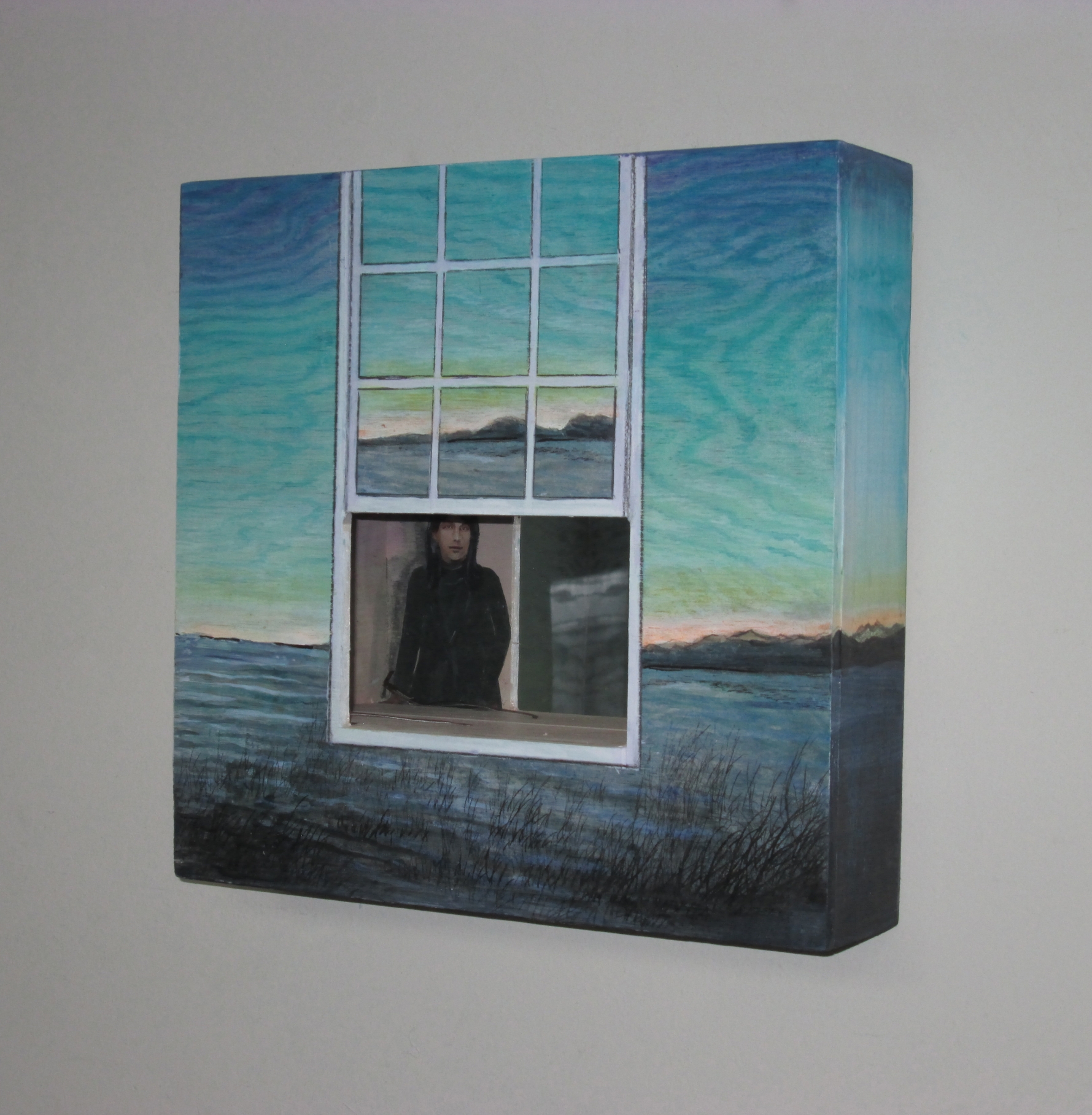
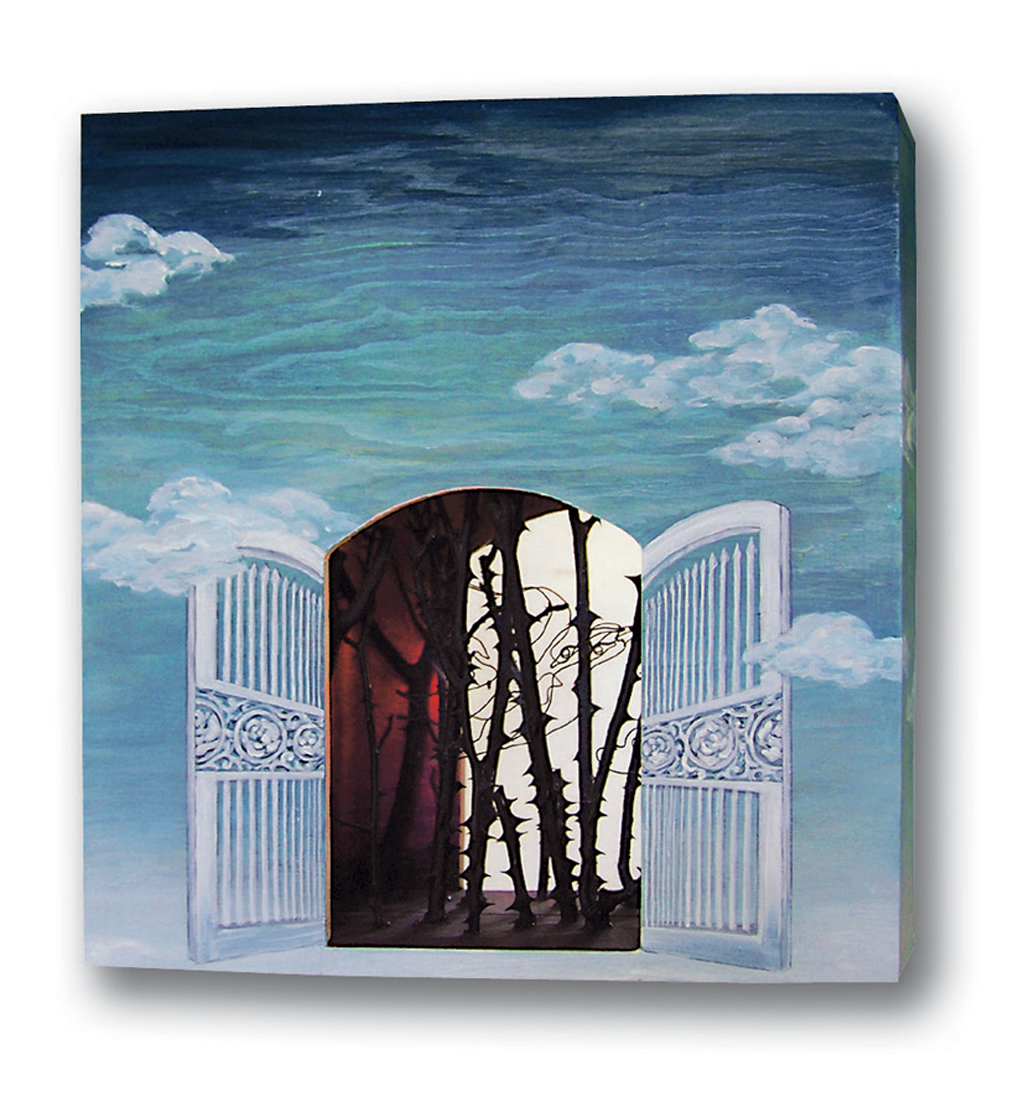
The tents innovatively extend Kim’s use of the shaped canvas into three-dimensional space, making for works of art that are literally as well as metaphorically shelters. In previous works Kim has opened the canvas so that the space beyond is visible and becomes incorporated in the work, as a symbol of the infinite beyond suggested by the dramatic landscape pictured.
In the tents, outer and inner space are united, that is, the infinite has merged with the introspective. In sum, Kim has used her Buddhist heritage, and knowledge of the Oriental landscape tradition, to make meditative works that convincingly suggest the difficult spiritual passage from darkness to light, from ignorance to tranquil higher consciousness, from mundane existence to transcendental experience.
===
Donald Kuspit is an art critic and professor of art history and philosophy at the State University of New York at Stony Brook. He is a contributing editor at Artforum, Sculpture, and New Art Examiner magazines, the editor of Art Criticism, and the editor of a series on American Art and Art Criticism for Cambridge University Press.