Critiques
2023
SimEunlog | SimEunlog MetaLab. Researcher, Art Counnoisseur
Upon graduating from the Seoul National University College of Fine Arts (1970). She has participated in over thirty solo exhibitions and one hundred group exhibitions. She resumed her activities in arts more seriously by majoring in printmaking at Sungshin Women’s University (1986) and was invited to teach contemporary Korean art as a visiting artist at the State University of New York at Stony Brook (SUNY) in 1997. She is currently an artist-in-residence at the Young Eun Museum of Art in Gwangju, Gyeonggi-do, South Korea and also resides in North Fork Sound, east of Long Island, New York. This exhibition held at the Young Eun Museum is divided into two main parts: paintings and a ‘kaleidoscope’ video installation. First, let's take a stroll through her paintings.
Homage to Tree Soul
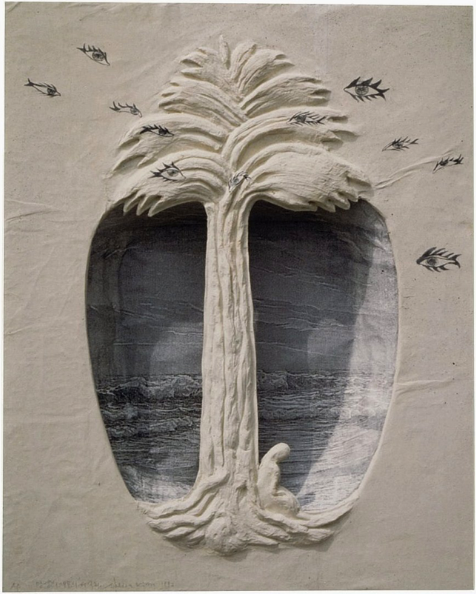
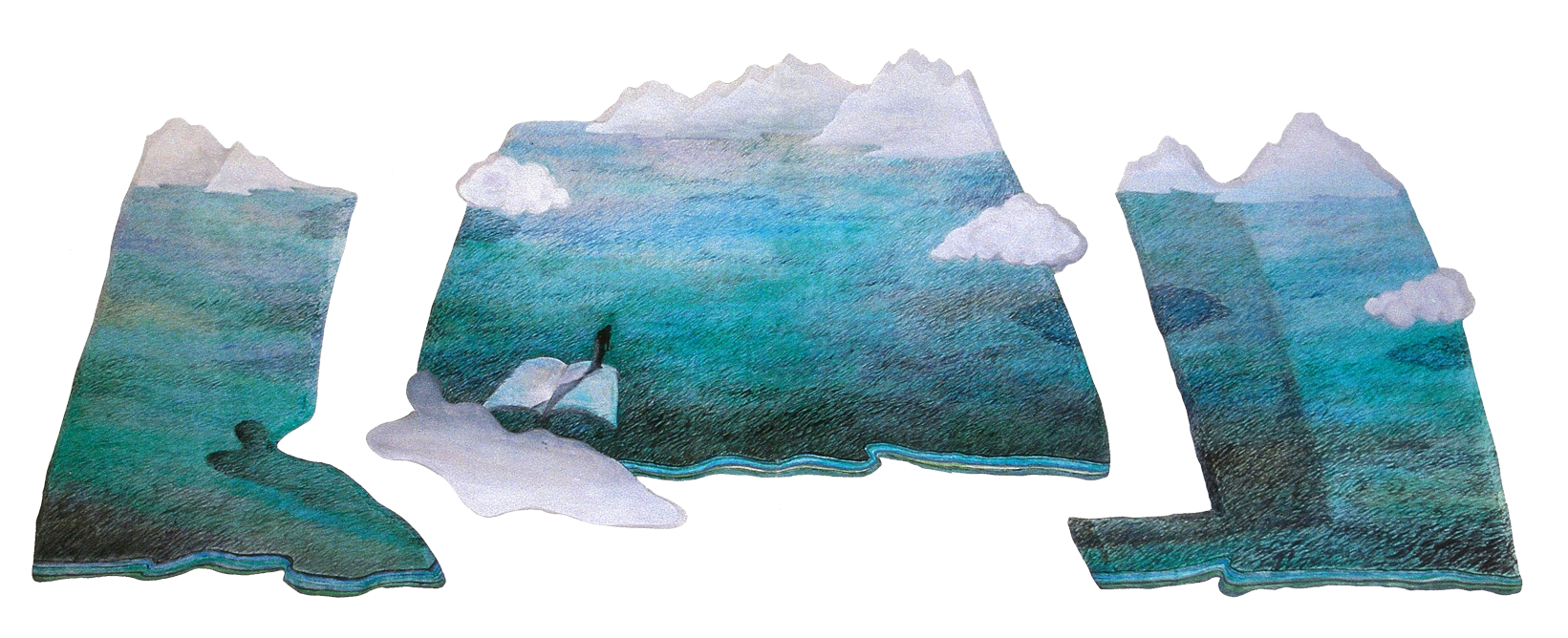
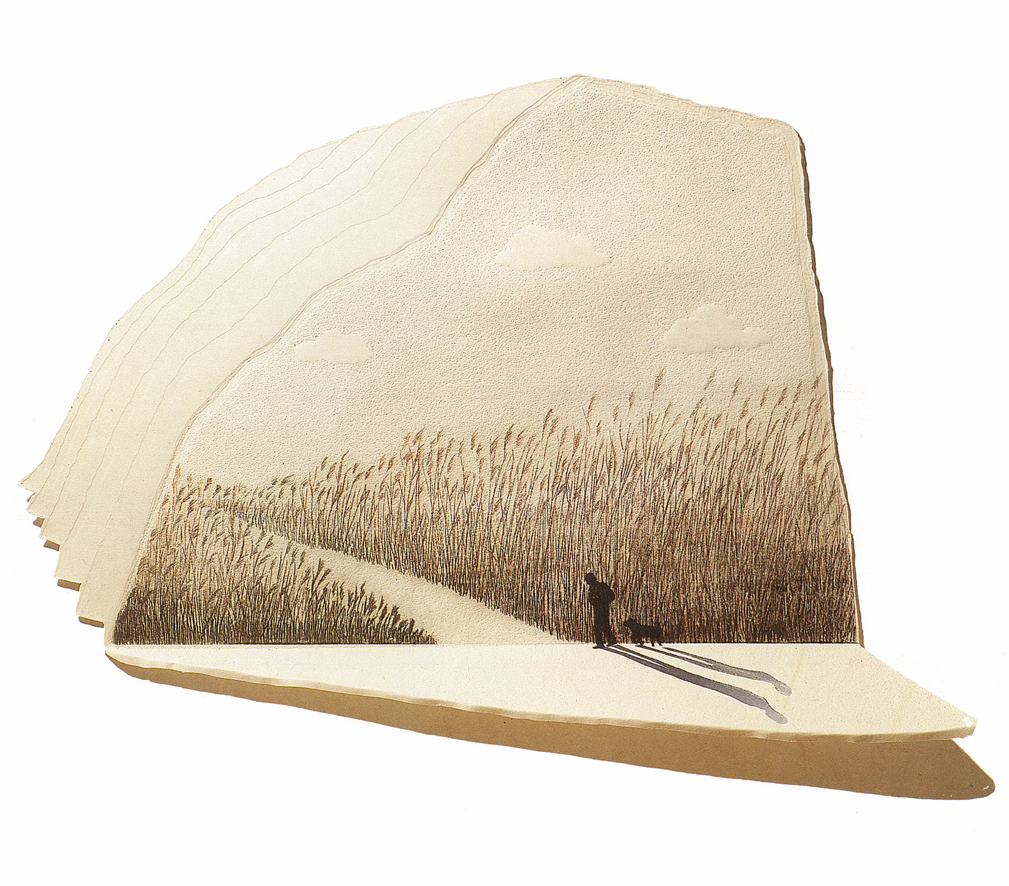
Though Whieza Kim's paintings seem to be familiar landscapes, something about them one would find quite unfamiliar. They are familiar and approachable, but, at the same time, they exude a certain mystery. This is because there is a natural “flow of energy” (氣) that cannot be imitated by humans. It becomes the heavy earth, then the rising mountains. At times it is the red sunset behind the mountains. In another work, it becomes the texture of waves on a vast ocean, which breaks into white mists. Looking at another work, the slightest movement of the wind creates a deep ripple that leaves a lasting impression. The accumulation and superimposition of grains of time create a stone. Thus, despite its small size, the stone emits a sublime resonance that has endured a long silence. Or it turns into a tree that seems to hold it all together.
Wheiza Kim paints with acrylics on wood, not on a regular canvas. Sometimes the pigments may cover the grain, yet she leaves the grains to reflect their natural shapes as much as possible. For a two-part or multi-part series, she looks for boards where the grains blend together. Sometimes she has to wait a long time for this to happen. Sometimes it doesn't happen at all. But some other times, the grains blend together by chance as if they came from the same tree. When the artist first encounters a new board, she reads the landscape it contains. The process is as if she were looking at the tree's past life. She sees and feels it from the tree's point of view and depicts it in such a way as to reveal the landscape that is deeply embedded between the grains as much as possible. This way of working is reminiscent of Michelangelo's quote, "I saw an angel trapped in marble, and I chiseled away at the stone until he was released from the cold stone."1) This is how Wheiza Kim, like Michelangelo, began her work.
Art connoisseurs and viewers can feel Wheiza Kim’s art works intuitively and sensually. However, one could appreciate her art works in further depth when accompanied by an aesthetic understanding of the work. Therefore, in this article, I will discuss the artist's work in terms of 'psychology' rather than 'a state of mind'. This is because the term "psychology" came up frequently in my interviews with her, and I believe it is one of the most important foundations and concepts in her works. I will do so with the help of the psychoanalyst Carl Gustav Jung (1875-1961 a Swiss psychiatrist and psychoanalyst), who had a strong influence on her aesthetics, and Donald Kuspit (1935- an American art critic and poet), a pioneer of psychological art criticism.
Red Book and Yogachara Thoughts
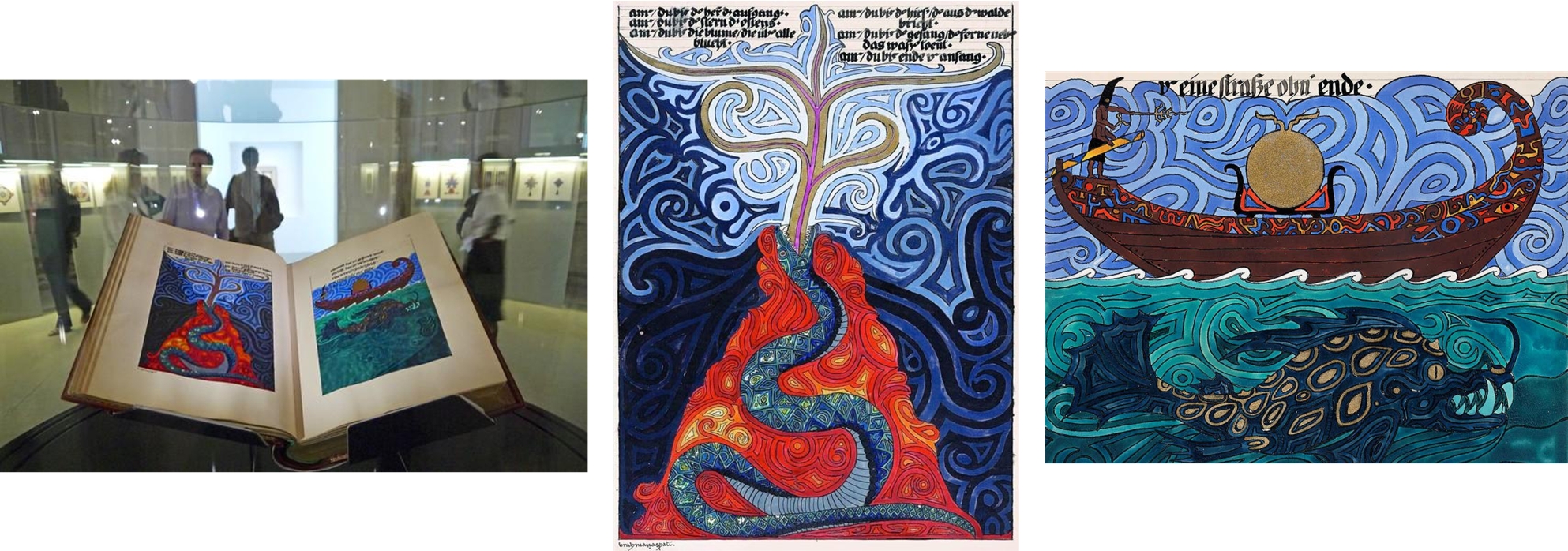
In the spring of 2023, during my interview with the artist Wheiza Kim in her studio at the Young Eun museum, Carl Jung slipped in and never left until the interview was over. The discussion started with Jung's psychoanalysis in general, but quickly turned to "The Red Book"1), which had been one of the important main works at the Venice Biennale in 2013, ten years earlier than the interview. As if Jung had continued his presence in her studio until the next day, the artist sent me the following artist's note.
"The RED BOOK I viewed ... was full of pictures that looked like shamanic archetypes from all over the world. .... In Jung’s dreams, certain difficult-to-interpret experiences from his past appeared, all of which were completely unrelated to his present life and could only be explained by the deep psychology of the human beings based upon Buddhist school of consciousness, Yogachara2)..... The unconscious does not disappear with rebirth. Very deep in the unconsciousness, the experiences from the past have been stored, only to emerge when we encounter certain situations."
As Wheiza Kim notes, Jung documents a journey into the depths of the complex inner world and unconscious, in words and pictures, exploring the psyche and showing how the self is integrated in Red Book. Along this process, a space is created for the core concept of Jungian theory, the principle that all elements interact and depend on each other and that new phenomena are formed in this process. Buddhist Yogachara explains the core principle that all phenomena interact and are interdependent. This ties in with the integration of the self with the individual's inner world, a major theme discussed in Carl Jung's Red Book.
Wheiza Kim visualizes this principle through the grain of a tree, which is the result of the interaction of different elements. Red Book shows how our inner processes change the way we understand ourselves. This is because the self is not a single, fixed object, but a dynamic process in which various elements interact and connect. This 'dynamic process' is reproduced in Wheiza Kim's work through 'grain' and 'mirror' (kaleidoscope).
Since the scope of the unconsciousness is beyond reason and infinitely expanding, the process is impossible to logically explain, particularly to us modern people who are accustomed to define limits. However, by acknowledging that there exists something more beyond our perceptions and reason, we can encounter significant insights into understanding ourselves and the world. That is where Wheiza Kim's works and Kuspit’s analysis resonate with each other.
Through her works, Wheiza Kim presents the interconnectedness emphasized by Yogachara, the school of consciousness, in Buddhism and in Carl Jung's Red Book. Her works provide essential perspectives for understanding our self’s and reality. The connections between them help us understand our inner world, gain a deeper understanding of the life and the world, and become more insightful and oriented, which is especially urgent in the AI’s fierce warring era like these days.
Kuspit and Kaleidoscope
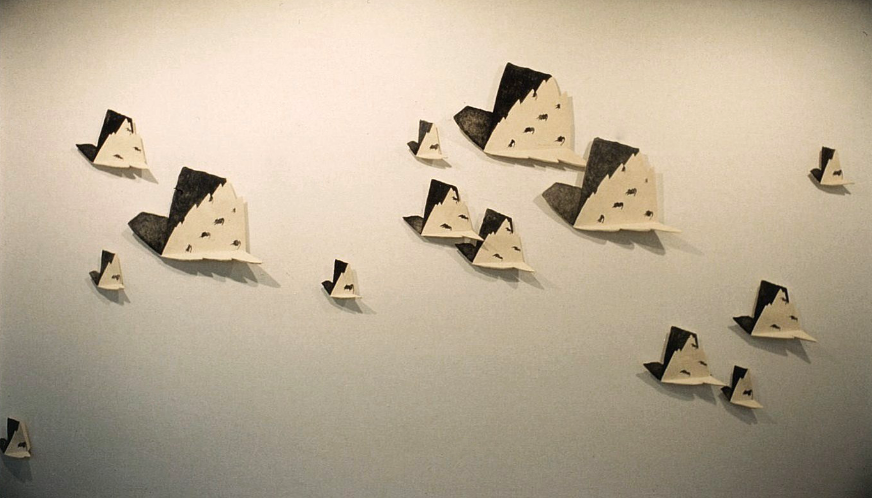
"When I crafted kaleidoscopes at school around the age of ten, I was fascinated by the illusion of confetti changing and expanding in a small space," Wheiza Kim recollects. When she moved to the United States, she came to experience the wonders of the kaleidoscopes once again. She felt her life being overlapped when she re-encountered the kaleidoscopes experiences. She enlarges the kaleidoscope, where illusion and life come together, so that the viewer is actually immersed in it. As Wheiza Kim considers the triangle as a perfect structure, she admires the tree as the perfection of all forms. The tree’s above-the-ground forms a triangle and its under-ground forms an inverted triangle (roots). Speaking of triangles, the artist refers to Pythagoras and explains that
"Pythagoras said that the triangle is the beginning of creation in a cosmic sense. The form and number three symbolizes perfection in geometry, universal truth in philosophy, eternity in western religions, and the elements of the universe, heaven-earth-human beings in eastern religions."
Donald Kuspit, an internationally renowned art critic, has expressed a special fondness for Wheiza Kim's kaleidoscopes. Donald Kuspit wrote his doctoral dissertation under the German philosopher Theodor W. Adorno. Kuspit became renowned in 1974 when he proposed phenomenological art criticism, and later developed his own style of art criticism by embracing psychoanalysis. In the article "Cloud Pole Ville," Kuspit mentions that he "loves Wheiza Kim's work," and explains about her art works under psychoanalytic criticism, as follows.
"These tents [kaleidoscopic works] innovatively extend the form of the canvas into three-dimensional space. They are the works of art and, literally, metaphorical shelters. In her previous works, Wheiza Kim opens the canvas as a symbol of the infinite beyond implied by dramatic landscapes, allowing the space beyond to become visible and integrated into the work. Inside the tent, the outer space and the inner space become one, the infinite and the inner space merging into one. In short, Wheiza Kim draws on her Buddhist heritage and knowledge of eastern landscape traditions, then turns them into meditative works of art that eloquently suggest the difficult spiritual pathway from darkness to light, from ignorance to serene elevated consciousness, and from everyday existence to transcendent experience."
Kuspit particularly loved Wheiza Kim's work because of two more reasons. First, her works reflect a strong Korean identity. "Western art is centered on science and reason. Her installations showcased the deep spiritual world of Eastern Zen Buddhism in New York, the mecca of Western art. It was a landmark event in the New York art world at the time." Considering Kuspit is known for practicing psychoanalytic art criticism, he must have been fascinated by Wheiza Kim’s visualization of the Buddhist school of consciousness in her works, which Kuspit called the elusive "Eastern psychology."
Wheiza Kim often uses mirrors crafting and creating her kaleidoscopes. After all, underneath it, all are mirror neurons. Mirror neurons are activated when we observe human behavior, and they allow us to imitate other people's actions and empathize with their feelings. Mirror neurons are also involved in bringing an empathy facing sensations like pain. People who have experienced more pain tend to be more empathetic. Perhaps that explains the hardships artists and religious people undergo. Most importantly, artistic empathy is activated when an artist creates a work of art and also when a viewer appreciates it, allowing them to experience the emotions embodied in the work of art3). As much as the cognitive and sensory empathy and communication are important parts of art, Wheiza Kim's kaleidoscope has ample emotions to communicate with its viewers.
Modern Times, As to the Depth of the Unconsciousness
As distant as the difference between consciousness and unconsciousness, the world has been completely separated into two worlds since November of last year, i.e., the atom world and the bit world. AI's language system reminds me of Jung's idea of synchronicity and consciousness and unconsciousness. The interconnectedness and unity of the self in Buddhism and Carl Jung's Red Book permeate through Wheiza Kim's wood grain. At first, the grain seems to expand horizontally, but after listening to her explanation of the aesthetics, the grain seems to deepen vertically as well.
As they say, the Buddhist school of consciousness is the psychology of the East. Wheiza Kim’s wood grain reminds one of the breadth and depth of the human unconscious in Carl Jung's Red Book, as well as the psychoanalytic art criticism of Kuspit. Wheiza Kim's art works of wood grains makes us think about the complex relationship between the human beings and nature once again. Carl Jung's Red Book is the first must-read book in this WEB 3.0 era. By visualizing the depths of Eastern and Western psychology and the human unconscious, certainly very difficult to express in words, Wheiza Kim provides a direction for insight in the current era of LLM (large language models) frenzy.
1) Carl Jung's "The Red Book" is a collection of his journal and artistic works. From 1914 to 1930, he wrote and explored his dreams, imagination, and inner world, aiming to deeply understand the balance of the self and the psychological processes of human nature through the exploration of his unconscious experiences. The motivation behind the writing was a desire to delve into the depths of the complex inner world and the unconscious, designing it as a profound inner journey of the self.
Throughout this process, Jung captured dreams, imagination, and fantasies, expressing them in the visual forms of drawings and writings. "The Red Book" is an intricate personal journal encapsulating inner exploration and experiences. Jung kept this work confidential and did not publish it during his lifetime. However, it is considered to have played a significant role in the development of Jung's psychology and analytical psychology, providing deep insights into psychological understanding and human nature through his personal exploration and artistic creation. It was first released and published in 2009.
2) "Synchronicity is a branch of Buddhism that posits that the mind perceives and creates everything. Our minds construct all things in the world, and without the mind, the world would not exist. Synchronicity practitioners argue that we do not see the world as it truly is but rather through distorted perceptions of the mind. They claim that training the mind can cease distorted perception and see the world as it really is. Synchronicity is a complex philosophy, but its essence lies in the immense power of the mind. Our lives can be drastically different depending on how our minds perceive the world. By training the mind, it is said that one can live a happier and more peaceful life." - Source: A summary of the shared responses obtained from LLM (Large Language Model) representatives, ChatGPT4, Bard, and Bing, inquired about "Synchronicity" on May 15, 2023.
3) While searching for information on "Mirror Neurons and Empathy in Art" through LLMs, the author came across an interesting coincidence. When asking Bing to draw an image related to the topic, Bing surprisingly responded with an image that resembled a tree, saying, "It's challenging, but I'll give it a try" (cf. Instagram: @82metai). This unexpected similarity to a tree in the process of depicting mirror neurons left the author astonished.